Amazon vs Flipkart for Indian D2C Brands: Which Platform Wins in 2026 and Why
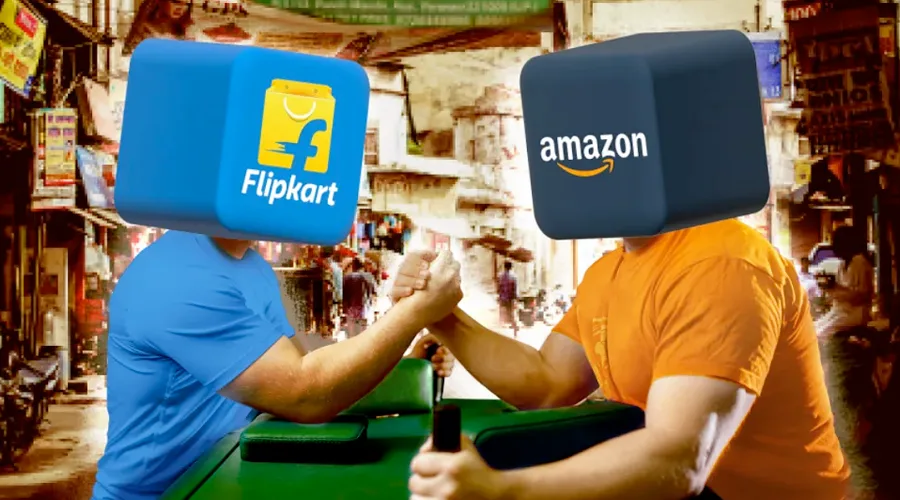
If your brand sells apparel or footwear, Flipkart wins on three of four dimensions that matter for volume and category authority.
If your brand is in beauty, supplements, or any consumable with a repeat-purchase cycle, Amazon wins on category reach, fulfillment infrastructure, and buyer intent. This post names the decision criteria, takes sides on each one, and gives you a working rule for where to start, or where to double down, in 2026. You will also get the one comparison most content in this space gets badly wrong.
What Amazon Is Actually Built For
Amazon India is designed around high-intent buyers who arrive knowing what they want. The platform's architecture rewards brands that can win on keyword visibility, A+ Content, and Prime-eligible fulfillment speed. For categories like beauty, skincare, and health supplements, Amazon holds 35 to 42% category share, which means a significant portion of India's serious supplement or skincare buyers open Amazon first and skip the search engine entirely. A mid-size Indian nutraceuticals brand that moved its top five SKUs into Amazon FBA in early 2024 saw its Prime badge cut delivery time to one day across Delhi NCR, Bengaluru, and Pune, which directly increased its conversion rate on those listings. Amazon also integrates with Amazon Fresh for FMCG brands chasing quick commerce reach without managing a separate Blinkit or Zepto relationship. For a D2C brand selling consumables with a 30-day repurchase cycle, that Prime ecosystem is a retention asset, not just a discovery channel.
What Flipkart Is Actually Built For
Flipkart is built for volume in fashion, footwear, and mass-market FMCG, and it earns that position. Myntra, which operates under the Flipkart Group, holds 48% of online apparel share. Flipkart itself controls 54% of online footwear sales. The platform's buyer base skews toward price-sensitive, value-driven shoppers in tier-2 and tier-3 cities, which is exactly where India's next wave of D2C growth is happening. A D2C footwear brand from Agra running on both platforms in 2024 found that 70% of its volume units came from Flipkart, mostly from cities outside the top eight metros, while Amazon contributed higher average order values from metro buyers. Flipkart's Account Management service for sellers, rolled out more formally in recent cycles, also gives growing D2C brands a direct escalation path for listing issues and promotional placements, something that historically required a third-party agency to navigate on Amazon.
Where These Two Platforms Actually Diverge
Category fit:
Amazon wins in beauty, health, and electronics. Flipkart wins in apparel, footwear, and household FMCG. This is the clearest divergence, and it is not a small margin difference. A beauty brand putting most of its effort into Flipkart is fighting against the platform's own traffic distribution. Category fit is the single highest-leverage variable in this decision.
Fulfillment reach and speed:
Amazon's FBA network and its Prime integration give it an edge for brands targeting metro buyers who expect next-day delivery. Flipkart's fulfillment is competitive in tier-2 and tier-3 cities, where its seller base and logistics partnerships are deeper. For a brand targeting Jaipur, Coimbatore, or Nagpur as primary markets, Flipkart's reach is equal or better.
Buyer intent and margin:
Amazon buyers arrive with higher purchase intent and lower price sensitivity in the categories it dominates. This typically produces higher average order values, even with Amazon's commission structure in the 15 to 40% range. Flipkart drives higher unit volume in its stronghold categories at lower margins. If your brand needs to move inventory fast to improve cash flow, Flipkart wins on velocity. If your brand needs to protect margin per unit, Amazon wins on intent quality.
Platform tools for D2C brand building:
Amazon's A+ Content and Brand Store features give D2C brands more space to communicate their story to buyers who are already interested. Flipkart has made progress here, but Amazon's toolset for brand-building inside the marketplace is still more developed. For a brand investing in the long-term authority of its product pages, Amazon offers more surface area.
The Comparison Most Brands Get Wrong
Most content on this topic frames the Amazon vs Flipkart decision as a feature comparison or a commission rate comparison. That framing misses the actual problem.
The real issue is commitment fragmentation. Research shows that 64% of Indian D2C founders flip their platform strategy every six months, ending up capturing only about 40% of the potential revenue available on any single platform. The question is almost never which platform is cheaper or which platform has better tools. The question is whether you are willing to operate one platform at full depth before spreading to the second.
A brand that half-runs Amazon while half-running Flipkart while half-running its own Shopify store will be outcompeted on all three by brands that have chosen a primary channel and optimised it completely. That means catalogue completeness, A+ Content on every high-margin SKU, pricing that responds to competitor movement, and fulfillment that qualifies for the platform's fastest delivery badges. The brands capturing meaningful revenue from these platforms in 2026 are not winning because they picked the better platform. They are winning because they picked one and ran it properly.
Commission rates matter less than execution depth. The 15 to 40% you pay either platform produces real returns when your listing ranks on page one. It produces nothing when your listing is buried on page three because your catalogue is incomplete and your content is stale.
How to Choose Based on What You Actually Sell
If your brand is in beauty, supplements, or any repeat-purchase consumable, start with Amazon, build your FBA presence in the four major metros, and treat Flipkart as a secondary channel after your Amazon catalogue is fully built out.
If your brand is in footwear, apparel, or mass-market home products and your growth market is tier-2 cities, start with Flipkart, qualify for its fast-shipping badges, and use Flipkart Account Management to get your promotional placement sorted before touching Amazon.
If your brand already has meaningful presence on both and is still not hitting revenue targets, the category fit and execution depth framework above will tell you which platform to pull resources from and which to invest deeper in. The quick commerce question, Blinkit, Zepto, Amazon Fresh, is worth evaluating separately once you have one of these two platforms operating at full depth, since quick commerce limits catalogue size and is better suited to your top three to five SKUs rather than your full range.
Get Your Platform Strategy Right Before the Next Planning Cycle
The platform choice is only the start. Executing it well, maintaining catalogue quality, responding to ranking signals, and keeping fulfillment fast enough to earn the badges that drive discovery, is where most D2C brands lose ground they should be winning.
If you are evaluating your Amazon or Flipkart strategy for 2026 and want a team that handles catalogue operations, listing quality, and performance tracking without requiring you to manage five separate vendor relationships, write to us at [email protected]. We work with D2C brands across categories to run marketplace operations end-to-end, so your team focuses on the brand decisions, and we handle the execution.
Ready to scale smarter?
From listing accuracy to performance insights, we handle every detail so your marketplace runs at its best.
Ready to elevate
your brand?
Drop us a message, and let’s start
building something amazing together.